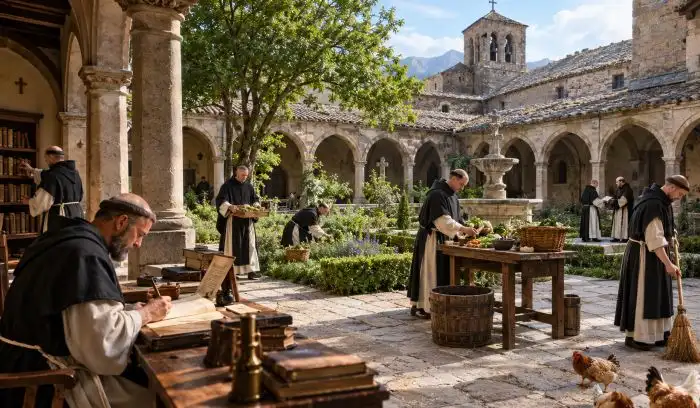
I think of a monk sitting quietly hunched over a prayer book, and nothing else. That monk prays and minds his own business, and he probably doesn't have any other skills worth listing. That's pretty much all wrong. 20 bizarre jobs medieval monks actually did reveal a surprising side of monastic life.
A monastery had to be completely self-sufficient, and that forced monks to take on roles that had nothing to do with prayer. For example, the high cost of leather (or parchment) for writing material meant a single large Bible could be made from the skins of hundreds of animals; therefore, preparing those skins became a monk's entire profession.
The Circator Patrolled the Cloisters as a Silent Spy
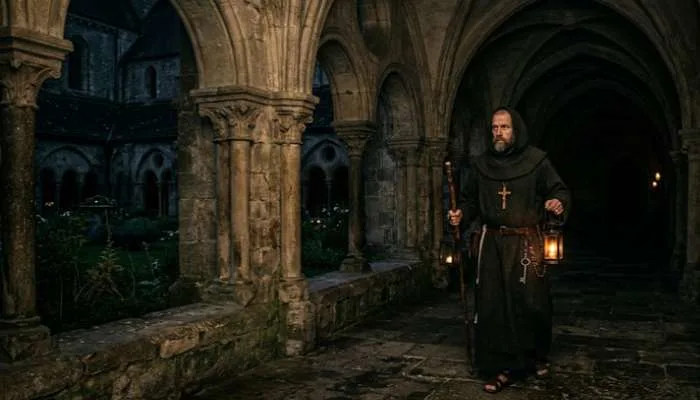
A Circator, or Roundsman, in a Benedictine and Cluniac monastery, wandered through the cloister, dormitory, and work halls at all hours, searching for rule-breakers. He kept track of those who he found sleeping through study periods or talking out of turn, but did not administer the punishment. He proclaimed these offenders before the community at Chapter the next day where the abbot administered punishment.
Read More: 25 Extraordinary Countries That No Longer Exist but Still Fascinate the World
A Monk Phlebotomist Bled His Brothers to Keep Them Well
Ancient people believed that blood circulates in your body, along with other "humors," such as black bile or yellow bile, that got out of whack when you weren't feeling good. To fix the imbalance, bleeding (known as minutio) formed part of standard healthcare in Europe.
The monk-phlebotomist jabbed the patient a couple of times a year with a little knife, then gave him a few days' bedrest, more food, and lighter work, and sent his brother back to the shop. No one was afraid of this. It felt good.
A Hydraulic Engineer Monk Built Self-Flushing Latrines
After the Cistercian order founded in 1098, its monasteries needed plentiful supplies of fresh water, for drinking, for working with, and for ditching. The monk engineers supplied it with working plumbing.
Dams and channels ferried water to the kitchen, then to waterwheels which powered mills for grinding flour, fulling cloth, and hammering metal, then into channels which carried away the waste from the abbey's latrines. It was multi-stage plumbing, nearly a millennium before most of Europe could even imagine plumbing.
The Palimpsest Scraper Erased Old Texts to Save Costly Parchment
Parchment was so expensive that one giant Bible could have used the skins of hundreds of animals - so one solution for many European scriptoria was to use old manuscripts for their pages, rather than buy new animals for new skins. And this meant that the monk in the role of palimpsest-scraper would scrub the old ink off the page with a mild acid like milk, then sand it down with pumice stone.
Today we can use imaging technology to read that layer of ink, which holds the ancient Greek and Roman text that monks simply rubbed out.
The Chamberlain Scheduled the Monks' Baths and New Boots
Since monks took vows of poverty and weren't able to buy their clothes, Officer Chamberlain arranged the buying. He purchased cloth at local trading markets, organized cobblers to make the leather boots, and distributed two wool habits per monk. He also helped organize the heating of communal baths three or four times a year, usually timed just before a major feast like Christmas or Easter. They weren't dirty. Just no daily baths.
The Cellarer Ran the Abbey's Entire Supply Chain
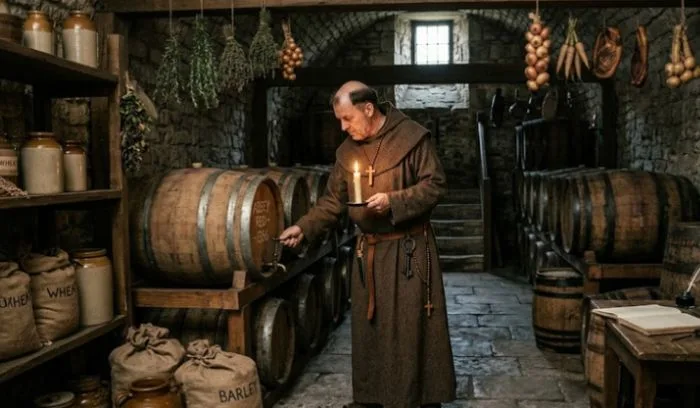
Below the abbot and prior in the ranks of the monastery was the Cellarer. The 6th century text The Rule of Saint Benedict lists him as being responsible for the overall logistics of the monastery.
As it was thought that abbeys should be self-sufficient, the obtaining, selling, buying, and distributing of provisions for the goods, fuel, and equipment needed by everyone in the monastery was in charge of the Cellarer. An English abbey in the 14th century had more than 30 workers supervised by the Cellarer.
You May Also Read: Ancient Myths and Legends That Were Actually True
Gold Leaf and Lapis Lazuli Illuminated Sacred Pages
Illuminating books of scripture served as a form of prayer in itself, and the monks who created them, called illuminators, used absolutely precious materials finest crushed mineral pigments like a stunning ultramarine blue derived from crushed lapis lazuli imported from Afghanistan, and real gold leaf.
They painted decorative initials and intricate pictures covering whole pages. The Book of Kells, finished about AD 800, demonstrates how much they would do for just one page of holy text.
FAQs
1. What unusual jobs did medieval monks do?
Medieval monks worked as caretakers, medical practitioners, manuscript makers, supply managers, water engineers, and supervisors who maintained order inside monasteries.
2. Why did medieval monks perform jobs beyond prayer?
Monasteries needed to manage food, clothing, healthcare, water, buildings, and daily supplies. Monks performed many of these duties to support their communities.
3. What was a circator in a medieval monastery?
A circator was a monk who patrolled the monastery to check whether other monks were following the rules and maintaining discipline.
4. How did medieval monks make books?
Monks copied texts onto parchment, prepared writing materials, and decorated pages with colourful pigments, gold leaf, and detailed illustrations.
5. Did medieval monasteries have plumbing systems?
Yes. Some monasteries, especially those run by the Cistercian order, developed water channels and drainage systems to supply fresh water and remove waste.
.