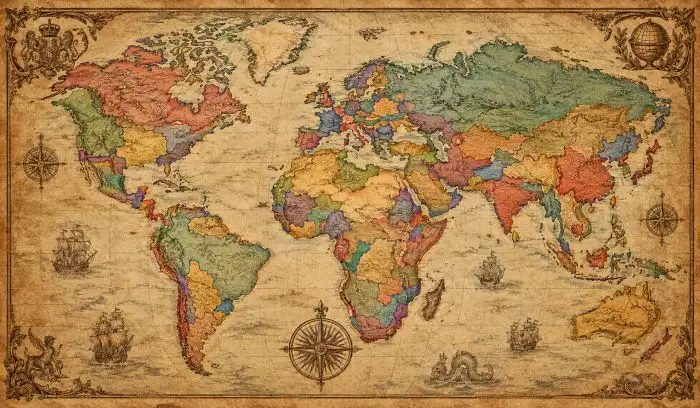
25 extraordinary countries that no longer exist reveal how borders, kingdoms and empires have changed over hundreds of years. Some were powerful empires that controlled huge areas, while others were tiny states that survived for centuries through unusual laws and agreements.
The Republic of Venice became a major centre of trade, the Kingdom of Bohemia shaped Central European history, and the Mali Empire became famous for its gold wealth. The Ottoman Empire ruled across parts of Europe, Asia and Africa for centuries. Although these countries and empires disappeared from political maps, their buildings, art, traditions and historical influence can still be seen in many places today.
Countries That No Longer Exist
Many countries, kingdoms, and empires that once shaped world history have disappeared from modern maps. Their stories, monuments, and cultural legacy can still be found across the places they once ruled.
Republic of Venice (697-1797)
At this moment in time, it's probably Venice means getting lost in a maze of canals, and hunting down famous sites and paintings in the crowds. But long before it became a popular travel destination, the Most Serene Republic of Venice flourished for over 1,000 years.
Venice is a city in Italy, which established itself in 697, becoming a powerful maritime and economic force with a prosperous merchant class that lavished money on luxury buildings and artworks. During the height of its power, Venice covered areas of modern northeast Italy and the nations of Croatia, Slovenia, Montenegro, Albania, Greece and Cyprus.
Read More: Ancient Myths and Legends That Were Actually True
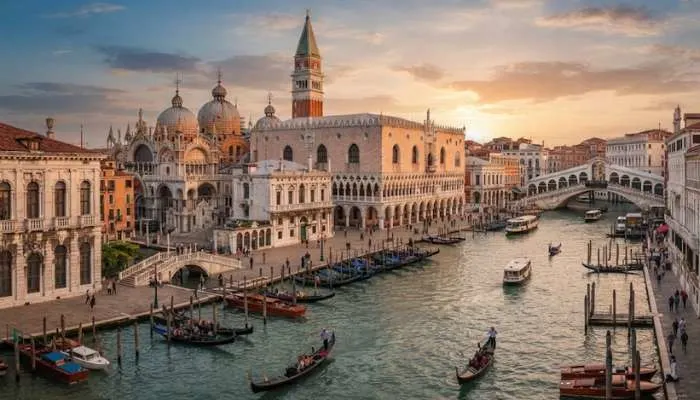
Republic of Venice (697-1797)
The republic's prominence declined in the 18th century with the opening up of new Atlantic trade routes. Following a string of catastrophic naval defeats, mostly to the Ottoman Empire, the French and the Austrians overran Venice in 1797 and partitioned it between them.
We see some of the Venice symbol still around in the old republic today; the lion shape of the city is still sitting outside the walls of Kotor in Montenegro; and you can see massive fortification walls in Corfu, Greece.
Couto Misto (c.900-1864)
Pushed by Spain and Portugal in the northwest of the Iberian Peninsula, this miniscule microstate—measuring only 10 miles (27 sq km) in area—remained a sovereign and independent country for a remarkable seven hundred years. A peculiar medieval land law assured its sovereignty, which was complicated and obscure enough to entangle it beyond the reach of both nations.
Couto Misto (c.900-1864)
The three tiny villages Rubias, Santiago de Rubias, and Meaus – composed the microstate and received a range of privileges, from exemption from taxes to exemption from military duty. Such perks were clearly too good to be true, and in 1864 the Treaty of Lisbon abolished the microstate, giving all three villages to Spain and a tiny strip of land to Portugal.
Kingdom of Bohemia (1198-1918)
A map of the 17th-century Kingdom of Bohemia, painted in the 1650s As represented by the modern-day Czech Republic (Czechia), the Kingdom of Bohemia had a profound and enduring effect on the culture and history of the country it is now contained within.
The royal House of Premyslid founded it in the late 12th century, and it became part of the Holy Roman Empire. From time to time, one of the Bohemian kings was elected the Holy Roman Emperor, Prague at times served as the imperial city of the Holy Roman Empire.
Kingdom of Bohemia (1198-1918)
The kingdom reached the height of its power in the 14th century, during the so-called "golden age" of Czech history, when Charles IV ruled Czechia and made it very prosperous. Bohemia merged into the Austrian Empire after the disbanding of the Holy Roman Empire in 1806 and remained within the Empire until the end of the First World War in 1918, when it formed much of the new state of Czechoslovakia.
Today, you can discover a multitude of these types of buildings everywhere in the Czech Republic, in the design of extraordinary churches, abbeys, castles, gardens of estates, squares and frontizations.
Mali Empire (c.1230-1670)
The Mali Empire: Steeped in religion and covering nearly half a million miles (1.3 million sq km) of West Africa, the Mali Empire reached its height during the 13th-17th century. Mansa Musa I (ruled 1312-37) led the empire most famously and was said to be the wealthiest individual in history as a consequence of gold and salt riches throughout the empire.
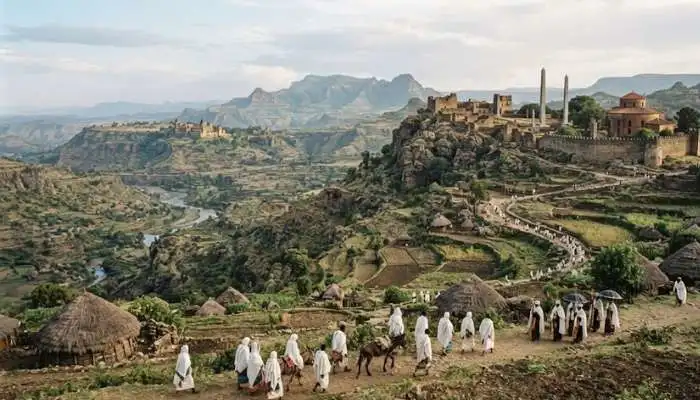
Abyssinia (1270-1974)
As a matter of fact, the Derg overthrew Emperor Haile Selassie in 1974 and then declared the People's Republic of Ethiopia. During that period, only two other countries in the world retained the emperor title as a designation for the head of state, namely Japan and Iran. Fascist Italy occupied Abyssinia during the 1930s, having never fully annexed it, and in 1945, Abyssinia received its full sovereignty.
Ottoman Empire (1299-1923)
The Ottoman Empire, which began in Turkey's Anatolia region in the late 13th century, grew to become one of the world's biggest and longest-lasting empires.
Sultan Suleiman the Magnificent (r. 1520-1566) led it to superpower status as it expanded its control over large areas of southeast Europe, the Middle East, and North Africa. In 1683, Ottoman armies laid siege to Vienna and nearly conquered all of Europe before the largest-ever cavalry charge stopped them.
You May Also Read: Top Cultural Festivals in Europe to Visit in 2026: US Trip Guide
Ottoman Empire (1299-1923)
The European colonial states eventually overshadowed the empire, which was already crumbling at the dawn of the 20th century. Following its allegiance to Germany during World War I, most of its land stripped the country and disbanded it in 1923, giving way to the much smaller Republic of Turkey.
Amazing examples of the legacy of Ottoman architecture remain today all over the former kingdom, such as the Topkapi Palace (right) in Istanbul, which preserves an eclectic collection of relics and treasures from that era.
FAQs
1. What are countries that no longer exist?
Countries that no longer exist are former states, kingdoms, republics or empires that disappeared because of conquest, political changes, treaties, mergers or the creation of new nations.
2. What happened to the Republic of Venice?
The Republic of Venice ended in 1797 after French forces under Napoleon invaded Venice. Its territories were later transferred between France and Austria.
3. Why did the Kingdom of Bohemia disappear?
The Kingdom of Bohemia ceased to exist as a separate kingdom after the collapse of Austria-Hungary in 1918. Its historic lands became part of the newly formed Czechoslovakia.
4. What happened to the Mali Empire?
The Mali Empire gradually declined as rival states and new regional powers became stronger. Its former territory is now divided among several modern West African countries.
5. When did the Ottoman Empire end?
The Ottoman Empire formally ended in 1922 after the abolition of the Ottoman sultanate. The Republic of Turkey was established in 1923.
.